6.7 Powerstroke Problems: 7 Common Issues by Model Year and How to Prevent Them
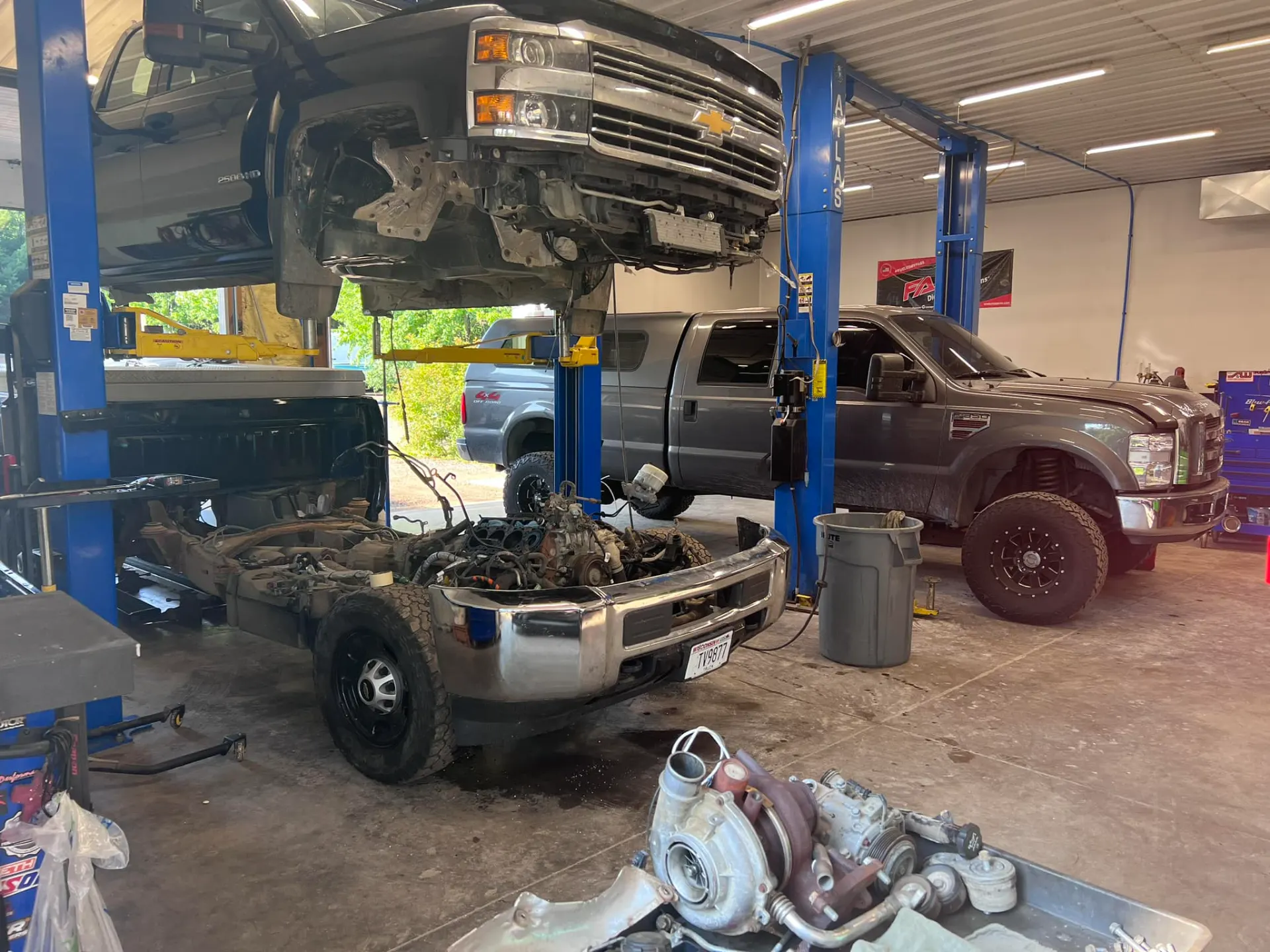
Most 6.7 Powerstroke problems trace back to a short list: the high-pressure fuel pump, the turbo on early trucks, a soot-loaded EGR cooler, and the sensors that watch the emissions system. The engine itself is stout. Ford has built it since the 2011 model year, and it has a far better record than the 6.0L and 6.4L that came before it.
This guide walks through the seven 6.7 Powerstroke problems we see most, which model years they hit hardest, what each one feels like from the driver’s seat, and what you can do to stay ahead of it.
Key takeaways
- The 6.7L is a strong engine. Most 6.7 Powerstroke problems come from the fuel system, the turbo on 2011 and 2012 trucks, and emissions parts.
- A failed high-pressure fuel pump is the expensive one. It can send metal through the whole fuel system.
- Short trips and long idle time are hard on the EGR cooler and the DPF.
- Clean fuel, on-time filters and scanning a warning light early prevent most big repair bills.
Is the 6.7 Powerstroke a reliable engine?
Yes, with a few known weak spots. The 6.7L was the first Power Stroke that Ford designed and built in house, and it fixed most of what hurt the two engines before it. Trucks that get clean fuel, regular filter changes and enough highway time routinely run for a very long time.
The trouble is that when a 6.7 does fail, it tends to fail in a handful of predictable places. Knowing them lets you catch the cheap version of the repair instead of the expensive one. If you want the symptom-first view, start with our guide to common Ford PowerStroke problems.

6.7 Powerstroke problems by model year
The 6.7L has gone through three main versions. The common 6.7 Powerstroke problems shift a little with each one, so the year of your truck tells you what to watch first.
| Model years | What changed | What to watch |
|---|---|---|
| 2011 to 2014 | First version of the engine | Turbo failures on 2011 and 2012, EGT sensors, coolant leaks, fuel pump |
| 2015 to 2019 | Larger redesigned turbo, more power | Fuel pump, EGR cooler soot, NOx sensors, coolant leaks through 2016 |
| 2020 and newer | Updated fuel system and internals | Emissions sensors, DEF faults, DPF loading on short-trip trucks |
A well-kept truck from any of these years can be a good one. The service history matters more than the badge on the fender.
The 7 most common 6.7 Powerstroke problems
1. High-pressure fuel pump failure
Of all the 6.7 Powerstroke problems, this is the one owners worry about, and for good reason. The 6.7L uses a Bosch CP4-style high-pressure pump that depends on diesel fuel for lubrication. Water, air or poor-quality fuel can wear it internally. When it comes apart, it sends metal downstream into the rails, lines and injectors.
That turns a pump replacement into a full fuel system job. The risk is best documented on 2011 through 2019 trucks, but fuel quality matters on every year. Warning signs include hard starts, a sudden loss of power, a stall under load and a low fuel pressure code. If you see those together, stop driving and call a shop that handles diesel fuel system repair.
2. Turbo failure on early trucks
The 2011 and 2012 trucks used a turbo with ceramic ball bearings that did not hold up, especially on tuned or hard-worked engines. Ford went to a larger, redesigned turbo for 2015, and turbo-related 6.7 Powerstroke problems dropped off after that.
A failing turbo usually announces itself with a siren-like whine, blue or white smoke, oil in the intake piping and weak boost. Those symptoms overlap with a simple boost leak, which is a much cheaper fix, so it pays to test before replacing anything. Our guide on a diesel losing power under load covers how a shop tells the two apart.
3. EGR cooler clogging
Ford redesigned the EGR cooler for the 6.7L so it is far less likely to rupture than the coolers on the 6.0L and 6.4L. The tradeoff is soot. Over time the cooler core loads up with carbon and restricts flow, and trucks that idle a lot get there sooner.
You will usually see a check engine light with an EGR flow code first, sometimes followed by reduced power or higher coolant temperatures. Catching it at the code stage is the difference between a cleaning or cooler replacement and a truck that derates on the highway.
4. EGT sensor failures
The 6.7L uses several exhaust gas temperature sensors to manage regeneration and protect the aftertreatment system. On earlier trucks they were behind some of the most frustrating 6.7 Powerstroke problems, because they could quit without warning. When one drops out, the truck can go straight into reduced power, often while towing.
The good news is that the sensors themselves are not expensive and are not hard to replace. The key is confirming which one failed with a scan tool instead of guessing.
5. NOx sensor and DEF system faults
Every 6.7L runs diesel exhaust fluid and a pair of NOx sensors to measure how well the system is cleaning up the exhaust. Failed NOx sensors, a bad DEF heater or pump, or contaminated fluid will set a warning and start a countdown to limited speed.
Do not ignore that countdown. The truck will follow through on it. This is true of every modern diesel, not just Ford, and it is one of the most common reasons trucks come in for diesel emissions repair.
6. Coolant and radiator leaks
The 6.7L runs two separate cooling loops, one for the engine and one for the EGR cooler, transmission cooler and charge air cooler. More plumbing means more places to leak. Among cooling-related 6.7 Powerstroke problems, radiator and coolant leaks are reported most often on 2011 through 2016 trucks.
Watch for a sweet smell, a low coolant warning or dried coolant residue around the radiator and turbo fittings. Coolant that disappears with no visible leak is a different and more serious problem, and it needs to be pressure tested right away.
7. DPF clogging on short-trip trucks
The diesel particulate filter cleans itself by burning off soot during regeneration. That takes heat and time. A truck that only makes short runs never finishes the job, and the filter slowly plugs.
The first sign is usually more frequent regens, then a warning light, then reduced power. We explain the whole process in DPF regeneration explained, including how to keep a filter from clogging in the first place.
What about 2023 and newer trucks?
Owners searching for 6.7 Powerstroke problems on the newest trucks should know that these engines have not been on the road long enough to show clear long-term patterns. What we see so far looks like every other late-model diesel: sensor faults, DEF system warnings and software updates.
If your truck is under warranty, document every warning light with a date and mileage and let the dealer handle covered repairs. You can also check for open recalls by VIN on the NHTSA recall lookup.
How to prevent 6.7 Powerstroke problems
Most 6.7 Powerstroke problems that get expensive start as cheap maintenance that got skipped. These habits make the biggest difference:
- Change both fuel filters on schedule. Follow the interval in your owner’s manual, and go sooner if you tow heavy or buy fuel from low-volume stations.
- Drain the water separator. Water is the fuel pump’s worst enemy.
- Buy fuel from busy stations. High-turnover diesel is cleaner and drier.
- Cut down on idling. Long idle time loads the EGR cooler and DPF with soot.
- Let regens finish. If the truck is cleaning the filter, give it a few more highway miles before you shut it off.
- Check coolant level monthly. A slow drop is your early warning.
- Scan warning lights early. A code caught this week is almost always cheaper than the same code next month.
When 6.7 Powerstroke problems mean stop driving
Some 6.7 Powerstroke problems can wait for an appointment. These cannot:
- A sudden stall or loss of power with a fuel pressure warning
- Coolant disappearing with no visible leak
- Heavy white smoke
- An overheating warning or a climbing temperature gauge
- A loud turbo siren along with oil smoke
Pull over, shut it down and have it towed. Driving on any of these can turn a repair into an engine replacement decision.
Frequently asked questions
What is the most common problem with the 6.7 Powerstroke?
Emissions-related faults are the most frequent 6.7 Powerstroke problems, including EGR cooler soot buildup, NOx and EGT sensor failures, and DEF system warnings. The most expensive common failure is the high-pressure fuel pump.
What years of the 6.7 Powerstroke have the most problems?
The 2011 and 2012 trucks have the most reported issues, mainly turbo failures and early sensor faults. Ford redesigned the turbo for 2015, and reliability improved from there.
How long will a 6.7 Powerstroke last?
With clean fuel, on-time filter changes and regular highway use, the 6.7L is known to run for a very long time. Maintenance history matters far more than model year.
Can I prevent high-pressure fuel pump failure?
You can lower the risk. Change fuel filters on schedule, drain the water separator, buy fuel from busy stations and never run the truck out of fuel.
Is it safe to drive with a DEF warning?
Only for a short time. The truck will count down to a speed limit if the fault is not fixed, so get it scanned as soon as the warning appears.
Do you work on 6.7 Powerstroke trucks in Hammond, WI?
Yes. Midwest Diesel & Automotive services 6.0L, 6.4L and 6.7L Power Stroke trucks, from diagnostics and fuel system work to full engine replacement.
Sources
- Pickup Truck Talk: Ford’s 6.7-liter Power Stroke common issues and failure points
- Diesel Hub: Common 6.7 Power Stroke engine problems
- BD Diesel: Ford’s 6.7L Power Stroke
Get diesel tips by email
Want more guides like this one? Leave your email and the shop will send maintenance tips and new articles as they come out. No spam, and you can ask to be removed any time.
6.7 acting up?
Midwest Diesel & Automotive in Hammond, WI handles Ford Power Stroke repair with live data and real testing, not guesswork. Call (715) 500-1840 or request service online.